Fall changes the way we live in our homes: we spend more time indoors, there are fewer hours of daylight, and we seek out spaces that feel cozier. Adapting your decor to the new season doesn’t mean buying new furniture—it means adjusting what you already have. Heavier textiles, an earth-tone color palette, warm lighting accents, and textured materials are all it takes to transform the feel of a room. We’ll walk you through the key elements of fall decor room by room, along with the most common mistakes to avoid.
What Defines Fall Decor?
Fall decor aims to create comfortable, inviting, and visually warm interiors. Unlike a complete renovation of the space, the seasonal change can be achieved through small adjustments to colors, fabrics, lighting, and accessories.
Wood, plant fibers, ceramics, linen, wool, and cotton add texture and help create a warmer atmosphere. You don’t have to use them all at once: combining two or three different materials is usually enough to add variety.
The use of color also changes: light shades can serve as a base, while autumnal colors appear in pillows, blankets, rugs, vases, or small decorative items.
Step-by-Step Fall Decorating
If you don’t know where to start, this order will help you transition between seasons without rushing and without buying too much:
- Take a look at what you already have: blankets, pillows, vases, baskets, and lamps that can be reused.
- Choose two or three fall shades that complement the neutral colors of your home.
- Change your textiles: pillows, blankets, and bedding make the biggest difference.
- Adjust the lighting with warm light sources scattered throughout the room.
- Add natural elements such as dry branches, pinecones, or pumpkins—but always in moderation.
Fall Color Palette
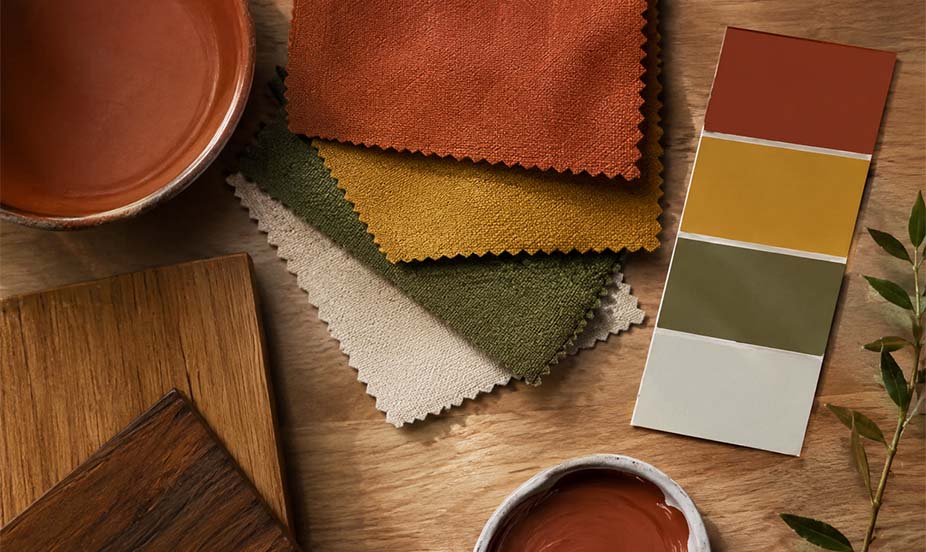
Colors are one of the easiest ways to change the atmosphere of a room. For fall decor, shades associated with the season’s landscape work especially well: earth tones, ochres, muted greens, browns, terracottas, and reddish hues.
A good strategy is to stick with the neutral colors that are already in the room and add two or three autumnal shades as accents.
Some of the colors you can incorporate include:
- Terracotta and roof tiles, to add warmth and depth.
- Mustard and ochre yellow, especially well-suited for small accents.
- Olive green or moss green, which ties the decor together with natural tones.
- Beige, cream, and off-white, as a base to balance the composition.
Textiles That Provide Warmth
In addition to adding color and texture, textiles make spaces feel more inviting. Blankets can be draped over the sofa, an armchair, or at the foot of the bed. Knitted fabrics, wool, or thick cotton add volume and a sense of warmth.
Throw pillows let you incorporate seasonal colors without making permanent changes. You can mix and match different sizes and textures, trying to find a common shade among them to maintain a sense of harmony.
To keep the blankets within easy reach without letting them pile up on the sofa, a wicker or natural-fiber basket next to the armchair solves the storage problem and adds texture to the overall look.
Not everything has to be new—changing the arrangement of the textiles you already have or mixing and matching pieces made from different fabrics may be enough to create a more autumnal atmosphere. If you’d like to explore this idea further, we’ll show you how to make your home cozy all year round.
Warm Lighting in the Fall
The days are shorter, and starting on the last Sunday in October—when clocks are set back one hour as daylight saving time ends, as established by Royal Decree 236/2002—it gets dark even earlier. We spend more time using artificial light, so it’s important to pay attention to both its color temperature and its distribution.
It’s also a good time to check your light bulbs: according to the IDAE’s recommendations, replacing incandescent and halogen bulbs with LED technology can save more than 80% in energy, and opting for focused lighting helps create more comfortable environments.
Instead of relying solely on the main light fixture, it’s better to create several light sources to achieve different atmospheres within the same room, for example:
- A table lamp next to the sofa.
- A reading lamp on a dresser.
- A reading lamp.
Warm light—with a slightly yellowish hue—is especially well-suited for autumn afternoons and evenings. Lamps with shades made of fabric, paper, wood, or natural fibers also help soften the light and add an extra decorative touch.
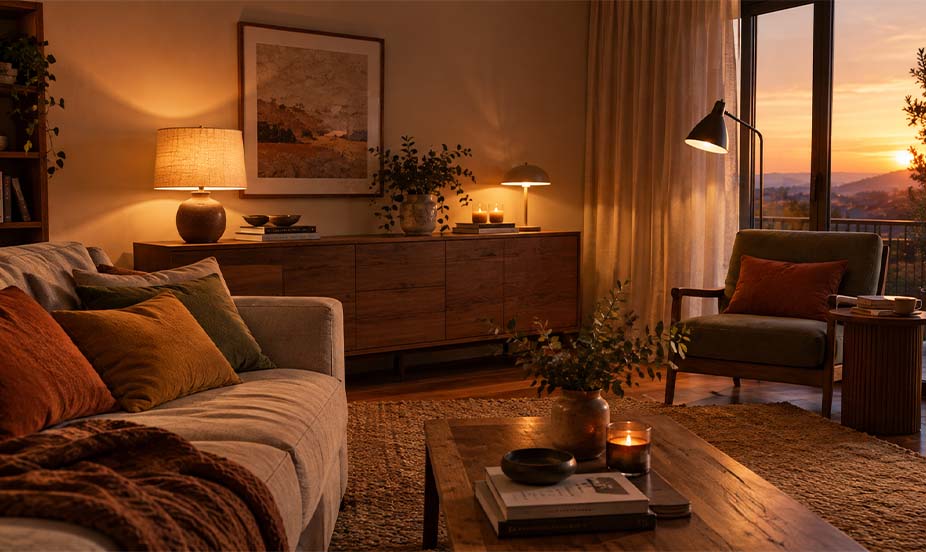
Candles complete this atmosphere: arranged on a tray, in ceramic or glass candleholders, or inside a lantern, they provide a very soft glow for the evenings. If you prefer scented candles, choose warm notes like wood, cinnamon, or vanilla, and avoid mixing several scents in the same room. Always place them away from curtains, dry branches, and fabrics, and never leave them burning unattended.
Well-distributed lighting can completely change the way a room is perceived. It’s not about lighting every corner equally, but rather about creating different zones and points of interest.
Fall Decor by Room
Fall home decor can be adapted to any room, although each space calls for different approaches:
|
Stay |
Main Characters |
Details that make a difference |
|
Living Room |
Blankets, pillows, and rugs |
Warm lighting, wood, ceramics, and wicker |
|
Bedroom |
Layers of fabric on the bed |
A knitted blanket at my feet and a bedside lamp |
|
Dining Room |
The Table and Its Table Linens |
Ceramic tableware, linen napkins, and a natural table centerpiece |
|
Entryway |
Small details |
Tray, Vase, Basket, and Fall Wreath |
And if you’re looking to rethink how a room functions beyond just changing it up for the season, our interior design and consulting service can help you organize your ideas and make informed decisions.
Living Room, the Main Retreat
The living room often becomes the heart of the home during the fall months. It’s the perfect place to add blankets, throw pillows, rugs, and warm lighting.
A throw draped over the sofa and a few earth-toned throw pillows can quickly change its look. If you already have a rug, there’s no need to replace it—you can use its colors as a guide when choosing new textiles.
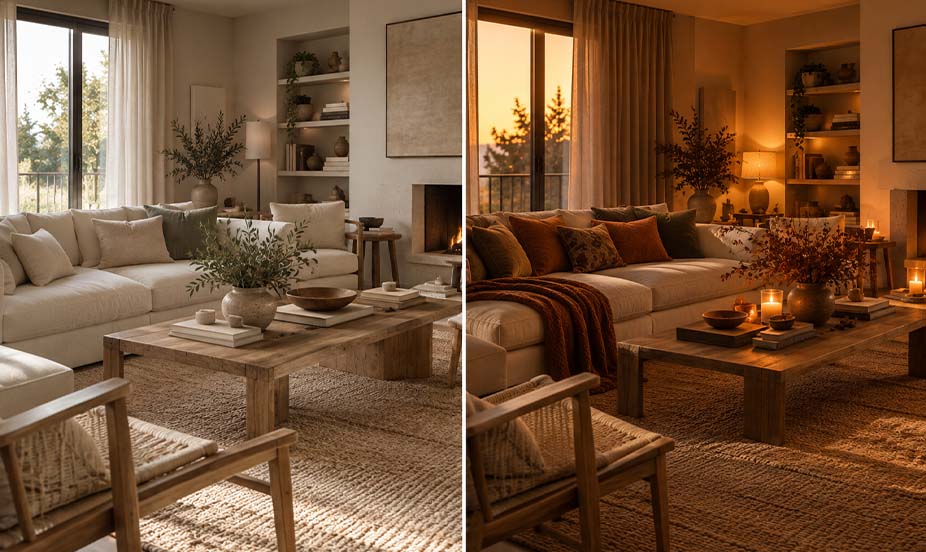
Materials also help set the mood: a wooden tray, a ceramic vase, a wicker basket, or a wooden side table can easily be incorporated into the decor.
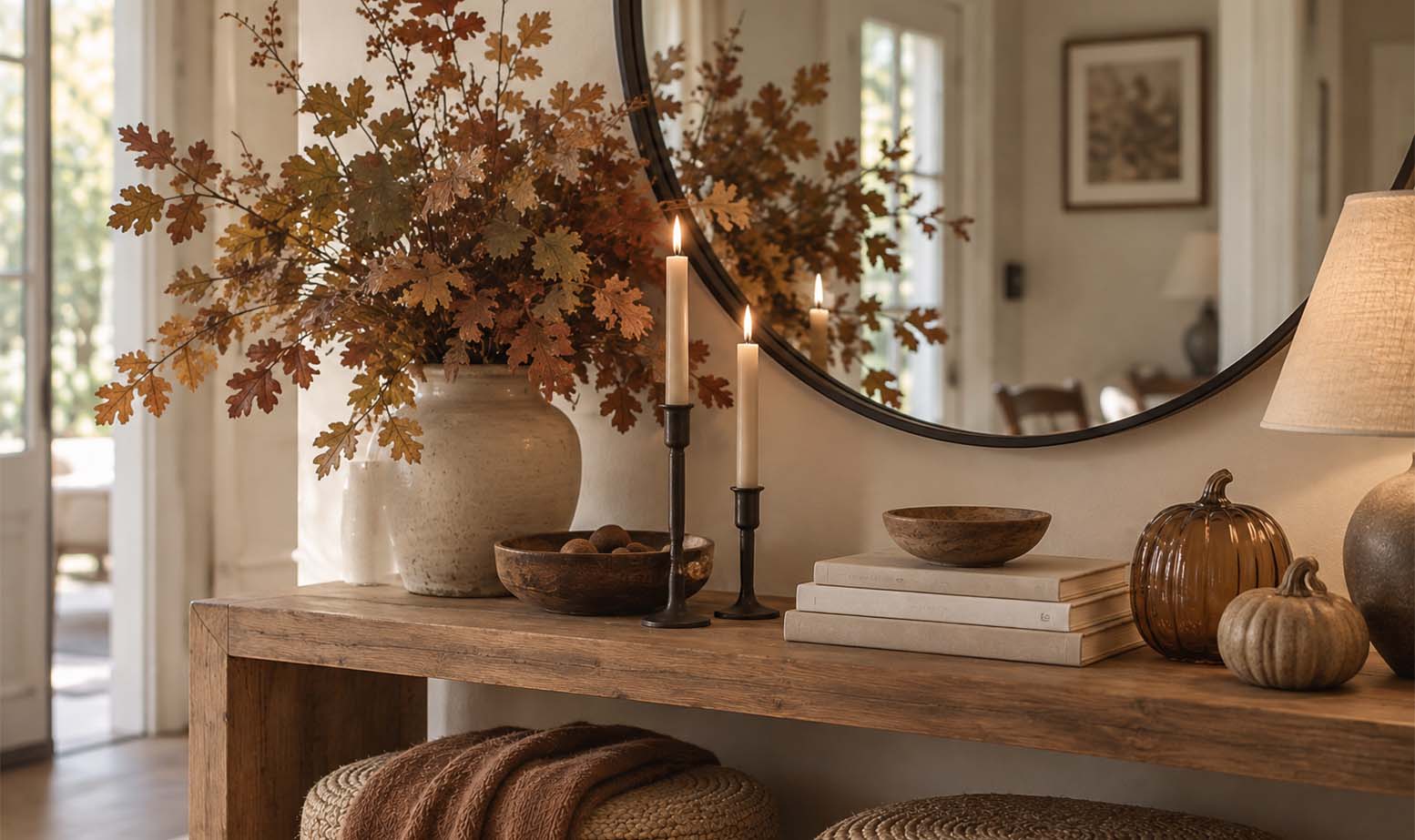
If you want to add some fall decorations to your home, you can create a small arrangement on a side table or a shelf; a vase with dried branches, a candle, and a few natural elements might be all you need.
Bedding, Blankets, and Fabrics
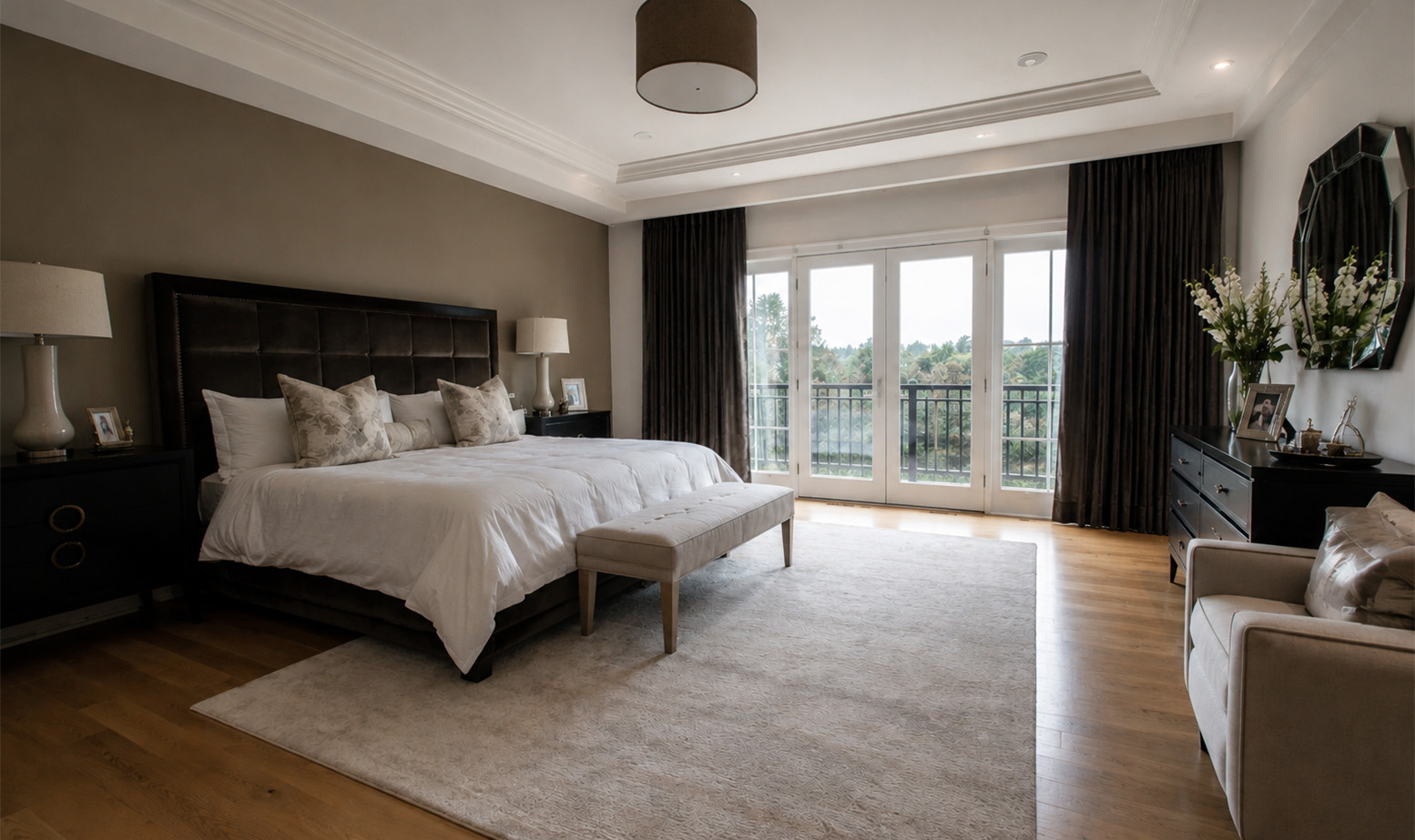
In the bedroom, layers of textiles take center stage. You can make the bed look cozier by adding a blanket, a bedspread, or some decorative pillows. It’s also a good time to change the bedding: a duvet cover made of washed cotton or flannel, in one of this season’s colors, can transform the bedroom in an instant.
You don’t have to stick solely to dark colors: a white, beige, or cream base combined with terracotta, brown, olive green, or mustard can add warmth without sacrificing brightness.
A knitted blanket at the foot of the bed is a simple and practical touch. You can combine different textures to add depth without having to use too many colors.
Lighting also plays an important role. A bedside lamp with warm light can create a more relaxing atmosphere, especially during bedtime. If you’re thinking about a more extensive makeover, you’ll find more tips in our guide on how to decorate a bedroom.
Dining Room and Autumn Table
The dining room can also be adapted to the season without changing the furniture. The table offers many possibilities for incorporating colors, textures, and natural elements.
Neutral table linens can be paired with ceramic tableware, linen or cotton napkins, and small accents in earth tones. Wood also works particularly well with this color palette.
To set the table for fall, you can choose a short vase with dried branches, a tray with candles, or a simple arrangement of natural elements. Fall decorations don’t have to be limited to purely decorative pieces: seasonal fruits, leaves, twigs, or small natural elements can be incorporated into the arrangement to create a warmer, more natural, and spontaneous look.
Foyer and Autumn Wreath
The entryway is a small space, but it serves an important purpose: it’s the first area of the house we see when we walk in.
A tray for keys or a wallet, a ceramic vase, a basket, or a small arrangement of plants are all it takes to usher in the change of season without taking up too much space.
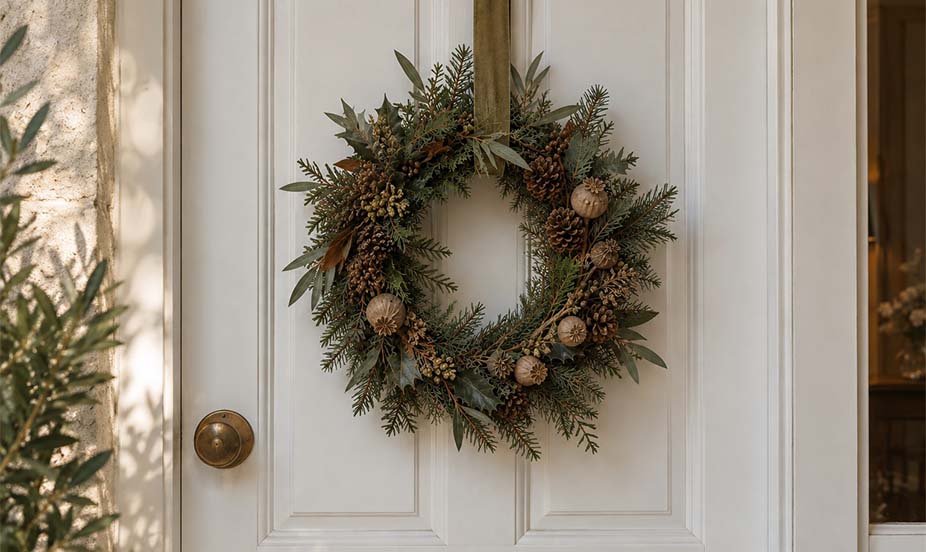
If you have a suitable exterior door, an autumn wreath is another way to welcome the season. You can make one yourself in just a few steps:
- It starts with a circular base made of wicker, rattan, or wire.
- Cover the hoop with flexible branches, such as eucalyptus or olive, and secure them with thin wire.
- Add dried leaves, pinecones, and a few earth-toned accents, scattered irregularly to create a natural look.
- Make sure it is the right size for the door before hanging it.
If the door doesn’t allow for it, the wreath can also be displayed indoors: resting on a shelf, hung on the hallway wall, or on the inside of the door itself.
Natural Fall Decorations
Natural elements work especially well in fall decor because they connect the interior with the changes taking place outside.
Dried branches are a very versatile option: you can arrange them in vases to decorate a console table, a corner of the living room, or a table. Combined with pinecones, dried leaves, pumpkins, or preserved flowers, they add a natural autumnal touch without overwhelming the decor. Pumpkins are one of the most recognizable elements of fall décor. Small ones work well grouped together on a console table, on a shelf, or as part of a centerpiece.
Wood, rattan, wicker, and other natural fibers work well as accessories year-round, so you won’t have to put them away when the season ends.
If you collect leaves, pinecones, or twigs in the countryside or at a park, clean them and let them dry thoroughly before bringing them indoors: this will keep moisture and insects away, and they’ll last you the whole season.
A good rule of thumb is to combine natural elements with pieces that are already part of the decor. That way, seasonal decorations blend into the overall look rather than looking like last-minute additions.
Mistakes to Avoid When Decorating for Fall
Changing your decor with each season can be fun, but it’s easy to go overboard. Some common mistakes can be avoided by following a few simple guidelines.
- Using too many colors: Incorporating all the fall hues at once can create an unbalanced composition.
- Don’t overdo it with seasonal motifs: pumpkins, leaves, pinecones, and other elements can serve as accents, but you don’t need to use them in every room.
- Overusing dark colors: Browns, burgundies, and dark greens add depth, but when used excessively, they can make a small room feel more oppressive.
- Don’t overlook the lighting: changing the pillows and blankets but keeping the lighting too cool can cause the overall look to lose some of its intended effect.
- Buying too much: You don’t need to redecorate your home every season. Before buying new accessories, take a look at the textiles, vases, baskets, and decorative items you already have.
- Ignoring proportion: a centerpiece that’s too large, too many throw pillows, or a wreath that’s out of proportion can throw off the balance of a room.
Fall decorating isn’t about filling your home with seasonal items, but rather about changing its atmosphere. A blanket, a few throw pillows, warmer lighting, natural materials, and an earth-tone color palette can be enough to make your home feel cozier without changing the furniture.
Do these ideas inspire you? Find more on our Instagram and explore our projects to see other spaces designed by The House.